
|
| You might also like: | Quokka Printout | Marine Mammal Printouts | Animal Coloring pages - N | Underground and Burrowing Animal Printouts | Iguana Printout | Today's featured page: Art Activities and Projects for Students |
| EnchantedLearning.com More Mammal Printouts |
Pangolin | Animal Printouts Label Me! Printouts |
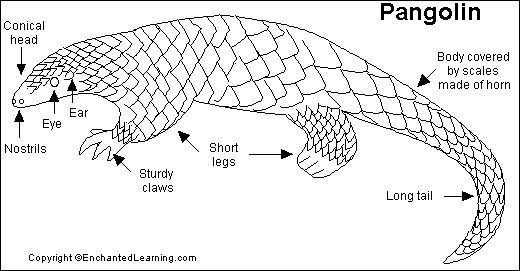
Anatomy: The pangolin has scales that cover everything except the belly, snout, eyes, ears, and undersides of the limbs. The pangolin has short legs with huge claws; it uses its claws to dig into ant hills and termite mounds. The sticky tongue is up to 27 inches (70 cm) long. The pangolin ranges from 24-62 inches (60-160 cm) long. The pangolin has no teeth. The long tail is prehensile (grasping); the pangolin can even hang from its tail.
Diet: This insectivore (insect-eater) uses its long, sticky tongue to catch ants, termites, and other insects. It hunts mostly at night; it is a nocturnal animal.
Predators: When in danger, the pangolin curls into a ball, protecting its soft belly and face. It may also hit an enemy with its tail or spray it with urine. Its enemies include lions, tigers, and humans.
| Search the Enchanted Learning website for: |