
|
| You might also like: | Nuthatch Printout | Label Woolly Mammoth Printout | Robin Printout | Mockingbird Read-and-Answer Quiz | Peregrine Falcon Printout | Today's featured page: Gandhi |
| Go to the Quiz All About Birds |
EnchantedLearning.com Mockingbird |
Animal Printouts Label Me! Printouts |
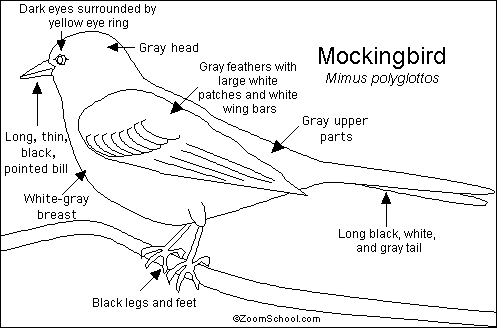
Song: The mockingbird has a variety of calls. It mimics many other birds' calls and the sounds of other animals (including insects), and can sing loudly for hours. An individual mockingbird can know dozens or hundreds of different songs. The mockingbird's scientific name, Mimus polyglottos (genus and species), means "Mimic of many tongues" in Greek.
Anatomy: The mockingbird is from 9 to 11 inches (23 - 28 cm) long. It has a slim body, a long bill and a relatively long tail (up to 6 inches = 15 cm long). The wing span is 13 to 15 inches (33-38 cm). It weighs from 1 to 2 ounces (28-56 g). The mockingbird is mostly gray, with large white patches on the wings and tail. Males and females are similar in appearance. The juvenile has a spotted breast.
Diet: The mockingbird eats fruit, insects (like grasshoppers and beetles), spiders, and other small animals (like crayfishes, snails, lizards and snakes).
Nest and Eggs: The mockingbird's nest is made of twigs, moss, and grass, and is lined with feathers. The nest is from 3 to 10 feet (1-3 m) high, located in trees and shrubs. The female lays 3 to 6 greenish eggs with dark spots in each clutch (a set of eggs laid at one time). Mockingbirds will ferociously protect their eggs and young; they will even swoop down and attack cats or people.
| Search the Enchanted Learning website for: |